Bottom line
A three-bowl set in small, medium, and large sizes covers most kitchens. Stainless steel is the lightest durable default for whisking, tossing, and double-boiler use; glass adds visibility and microwave compatibility when labeled for it; ceramic is stable and attractive but heavy; plastic is light and inexpensive but needs careful heat and scratch management.
Prioritize a broad stable base, a rim you can grip, dimensions that fit your cabinets, and care instructions that match how you cook. A lid, handle, spout, or nonslip base is useful only when it does not make cleaning and nesting harder.
Start with the tasks you repeat
List the jobs the bowls must handle: whisking eggs, kneading dough, tossing salad, marinating, melting chocolate, mixing batter, serving, storing leftovers, or using a hand mixer. The best material for one task may be inconvenient for another.
A light metal bowl is easy to lift while folding batter. A heavy glass or ceramic bowl stays planted under a hand mixer. A deep narrow bowl contains splatter, while a broad shallow bowl makes salad tossing easier. Buy for the repeated jobs, not a perfectly matched photo set.
Material comparison
| Material | Best qualities | Main trade-offs |
|---|---|---|
| Stainless steel | Light, durable, quick temperature response | Not microwave-safe; can slide |
| Glass | Visible, stable, often microwave-safe when labeled | Heavy; can chip or break |
| Ceramic | Stable, attractive for serving | Heavy; glaze may chip |
| Plastic | Light, inexpensive, quiet | Can scratch, stain, or retain odors |
| Silicone | Flexible, collapsible options | Less rigid for vigorous mixing |
Stainless steel: the practical default
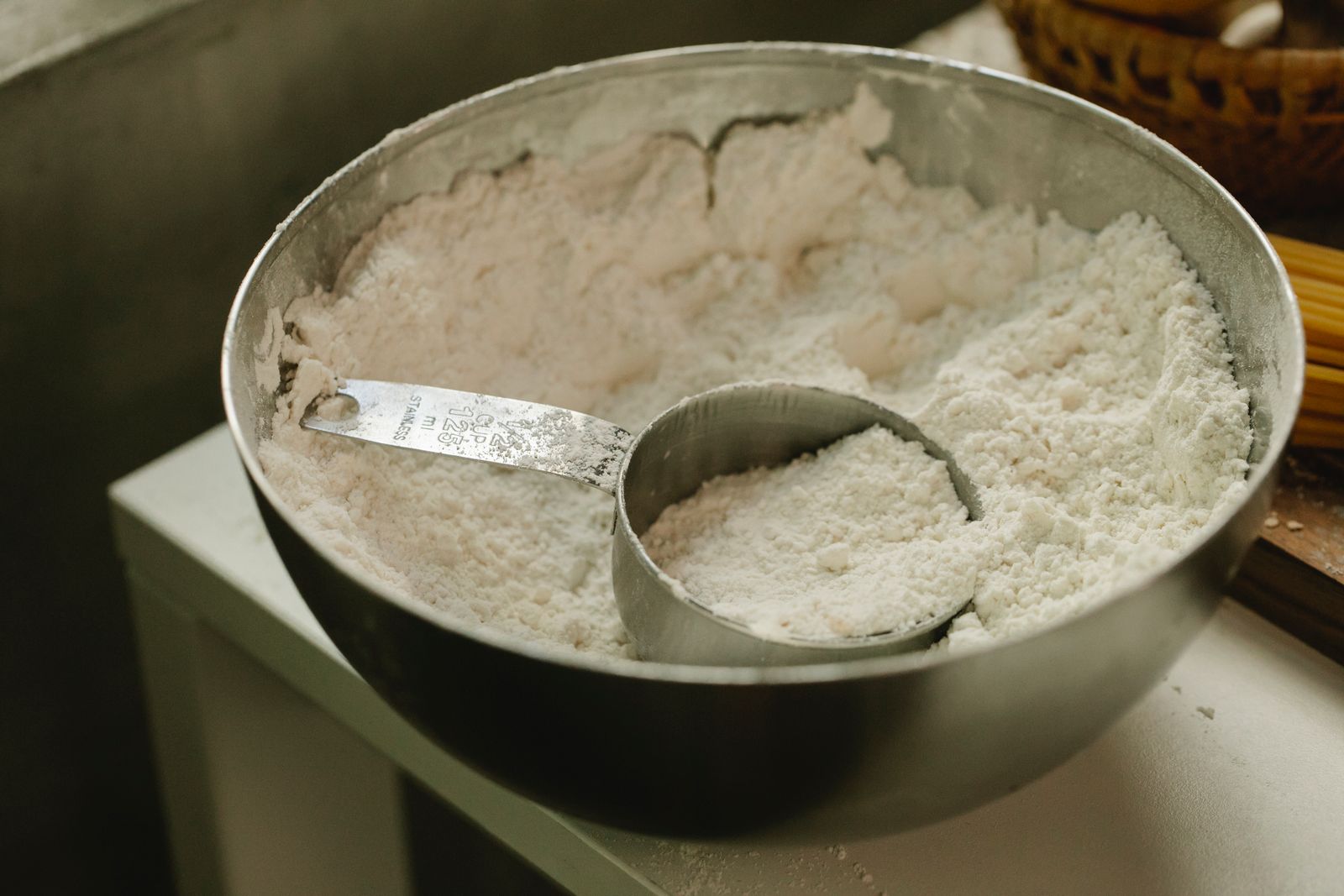
Stainless steel bowls tolerate drops, chill quickly, and are easy to lift. They work well for whipping cream over ice, mixing dough, tossing salad, and setting over a saucepan as an improvised double boiler when the fit is safe. They do not belong in a microwave.
If you use a bowl as a double boiler or melt chocolate over simmering water, an electric kettle can supply hot water without occupying a burner. Our guide to how to choose an electric kettle covers capacity, temperature control, and basic safety features.
Look for a smooth interior, a rolled rim without sharp seams, and enough gauge that the bowl does not flex dramatically. A brushed exterior hides scratches better than a mirror finish. Metal transmits heat quickly, so use protection around hot steam and do not assume the rim remains cool.
Glass: visibility and weight
Glass lets you see whether flour or sauce remains unmixed at the bottom. Its weight keeps it stable, and some tempered or heat-resistant glass bowls are labeled for microwave use. Check the exact product instructions; not every glass bowl tolerates microwave, oven, freezer, or sudden temperature change.
Inspect the rim and base for chips before every use. Discard a damaged bowl according to local guidance rather than continuing to mix in it. Avoid thermal shock: do not move a cold bowl onto a hot burner or pour very hot liquid into glass unless the manufacturer explicitly allows the transition.
Ceramic: stable and table-ready
Ceramic bowls are attractive enough for serving and heavy enough to remain stable during mixing. Glaze can provide a smooth, easy-clean surface, but chips and cracks create rough areas. Verify food-contact, dishwasher, microwave, and oven claims for the exact piece.
Large ceramic bowls become heavy when filled. Test whether you can hold and scrape the bowl with one hand. Decorative handles may help lifting but also consume cabinet space and create stress points.
Plastic and silicone: light but task-specific
Plastic bowls are easy to handle, quiet on the counter, and inexpensive. Scratches can trap residue and textured surfaces can be harder to clean. Replace bowls that are deeply scored, warped, or permanently damaged. Use them with heat and microwaves only when labeled for the intended conditions.
USDA guidance says to microwave only utensils labeled microwave-safe and warns against repurposing cold-storage tubs for cooking. Silicone bowls can collapse for storage and flex for pouring, but a soft wall may be frustrating with a hand mixer or stiff dough.
Choose useful sizes
A small bowl around 1 to 2 quarts handles eggs, sauces, and prep. A medium bowl around 3 to 4 quarts covers batter and side dishes. A large bowl around 5 to 8 quarts provides headroom for dough, salad, and mixing without spillover. Manufacturers measure capacity differently, so compare dimensions as well as volume.
Headroom matters. A bowl filled to its stated capacity is not usable for vigorous whisking. For a hand mixer, choose a bowl much larger than the ingredient volume so beaters can move without throwing liquid over the rim.
Shape changes performance
A rounded interior lets a whisk reach the bottom and sides. Squared corners can trap flour. Deep bowls contain splatter and help with whipping; broad bowls make folding, tossing, and cooling easier. A narrow base concentrates ingredients for small batches but may feel less stable.
Check the curve where the wall meets the bottom. A smooth continuous curve is easier to scrape with a spatula and simpler to clean than a sharp shelf or decorative ridge.
Stability and nonslip bases
A flat base should sit without rocking. Stainless bowls sometimes use silicone rings to prevent sliding. Those rings add grip but can trap water, absorb odor, or limit double-boiler use. Confirm whether the base is removable and dishwasher-safe.
A damp towel placed under a plain bowl can improve stability for many tasks. Keep fabric away from burners and do not use an unstable workaround with hot liquids or powered mixers.
Rims, handles, and spouts
- A rolled rim provides grip and protects the edge, but sealed construction is easier to dry.
- A handle helps with pouring and hand-mixer control but makes nesting less compact.
- A spout supports batter and dressing but works best when paired with a secure grip.
- Measurement marks are convenient only if they remain readable and reasonably accurate.
- A pour lip should direct liquid cleanly rather than dribbling down the outside.
- Lids turn bowls into storage but must fit without distorting the rim.
Lids and storage
Lidded bowls can reduce transfers between mixing and refrigeration. Check whether the lid seals tightly or merely covers. A tight seal does not automatically make a bowl safe for transport, and fermenting dough may require venting.
Test the nested height of the complete set. Bowls with wide rims, handles, and nonslip rings may not nest fully. Store lids vertically in a rack or inside the top bowl if they do not become trapped.
Hand mixers and metal tools
Follow both bowl and appliance instructions. Metal beaters can mark softer plastic and some decorative surfaces. Glass and ceramic resist scratching but can chip if struck. Keep the beaters moving in the mixture rather than hitting the sides.
A powered mixer can rotate a light bowl. Choose a stable base and maintain a secure grip without placing fingers near moving beaters. Unplug the appliance before scraping or changing attachments.
Cleaning and allergen management
Smooth, intact surfaces are easiest to clean. FDA research on food-contact surfaces found that surface texture and material affect allergen removal and that a full wash-rinse-sanitize-air-dry process was effective in the studied retail setting. At home, follow product and dishwasher directions and pay special attention to seams, nonslip rings, and scratches.
Households managing food allergies may prefer dedicated, clearly identified tools and bowls. Consult medical or allergy professionals for an appropriate kitchen plan rather than assuming one material eliminates cross-contact risk.
Common buying mistakes
- Buying many tiny size steps instead of three clearly different bowls.
- Assuming all glass is oven- or microwave-safe.
- Choosing a large bowl that does not fit the dishwasher or cabinet.
- Ignoring total filled weight.
- Accepting a rocking base because a nonslip mat can hide it.
- Buying handles and lids that prevent nesting.
- Using scratched or heat-damaged plastic indefinitely.
A practical three-bowl set
For a first set, choose a small bowl for eggs and sauces, a medium bowl for cake batter and side dishes, and a large bowl with generous headroom for dough and salad. Stainless steel covers the widest range at low weight. Add one microwave-safe glass bowl separately if reheating and visibility matter.
This mixed approach is often more useful than buying every bowl in the same material. It also makes individual replacement easier when one piece breaks or no longer suits the task.
FAQ
Are stainless steel bowls safe for acidic foods? Food-grade stainless steel is commonly used for mixing, but follow the product guidance and avoid damaged or corroded surfaces.
Can glass mixing bowls go in the oven? Only when the manufacturer explicitly rates that exact bowl for oven use and temperature changes.
Do nonslip bases go in the dishwasher? Some do and some separate or trap water; check the care instructions.
What size bowl is best for bread dough? Large enough to leave expansion and kneading room, usually at least several quarts for a home loaf; match the recipe batch.
Should I buy bowls with lids? Yes if you routinely proof dough or refrigerate mixtures, provided the lids store and clean easily.
Sources
- USDA Food Safety and Inspection Service, Are Utensils Microwave Safe? - https://ask.fsis.usda.gov/article/Are-utensils-microwave-safe
- U.S. Food and Drug Administration, Food Packaging and Other Food-Contact Substances - https://www.fda.gov/food/food-ingredients-packaging/food-packaging-other-substances-come-contact-food-information-consumers
- U.S. Food and Drug Administration, Allergen Removal and Transfer Using Cleaning Methods - https://www.fda.gov/food/retail-food-protection/allergen-removal-and-transfer-using-wiping-and-cleaning-methods-retail-food-establishments