Bottom line
Measure the entryway and the largest shoes first, then choose storage for the pairs actually used each week. Open racks ventilate wet footwear, cabinets hide clutter, and benches add a useful seat but require more depth. Leave the walking route clear, use a removable drip tray where needed, and anchor tall or narrow units according to their instructions.
The best system makes the daily habit easy: shoes come off, damp pairs have somewhere to dry, and the path to the door remains open. Capacity claims matter less than usable shelf height, depth, and the mix of footwear in your household.
Measure the space and the traffic path
Record wall width, usable depth, baseboard projection, outlet locations, and the swing of the entry door. Then measure the remaining walkway with the furniture represented by painter tape or a cardboard footprint. Open the door fully and walk through while carrying a bag to see whether the layout still works.
A slim cabinet may project only a short distance while closed but need more clearance when its tilted compartment opens. A storage bench needs knee room in front. Also check vents, radiators, and floor transitions; blocking them can create a maintenance problem.
Count the right shoes
Count the pairs used during an ordinary week, not every shoe in the house. Entryway storage works best as a rotation point. Seasonal, formal, and rarely worn shoes can live in a closet, leaving room for daily pairs to go away without stacking.
Measure the tallest boot, longest shoe, and widest pair. Product photos often show low sneakers placed toe to heel; real capacity drops when shelves hold high-tops, work boots, or large sizes.
Choose the format
| Format | Best for | Main trade-off |
|---|---|---|
| Open rack | Ventilation and quick access | Shoes remain visible |
| Closed cabinet | A calm, uncluttered look | Wet footwear needs airflow |
| Storage bench | Seating plus everyday pairs | Uses more floor depth |
| Cubbies | Assigning space by person | Fixed openings limit boot sizes |
| Vertical tower | Small footprint | Must be stable and often anchored |
| Drip tray and hooks | Wet-weather staging | Not long-term storage |
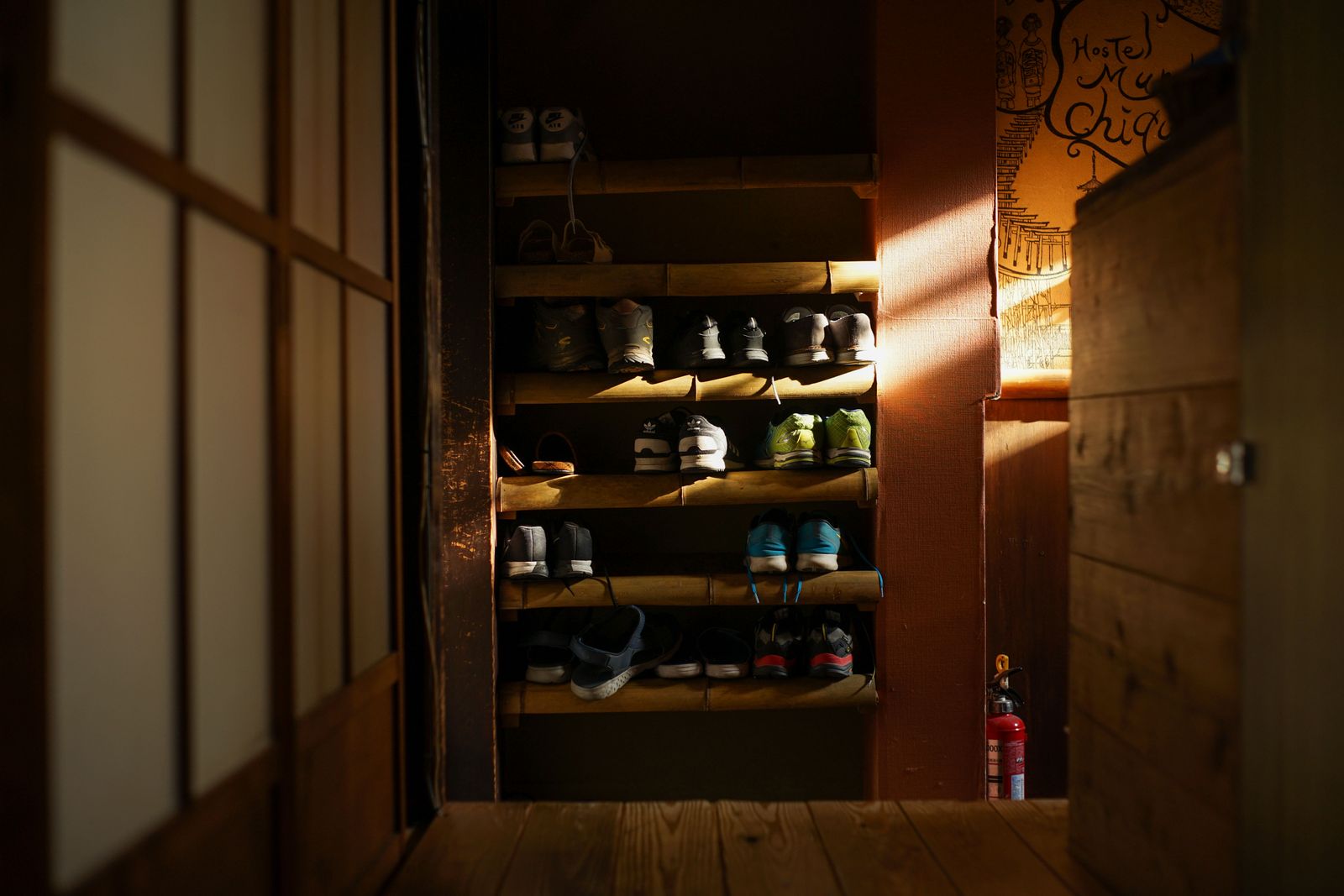
Open racks: simple and ventilated
An open rack makes it obvious which spaces are free and lets damp shoes release moisture. Look for shelf spacing that fits your footwear and feet that stay stable on the actual floor. Slatted shelves shed grit but can let dirt fall onto pairs below; solid shelves contain debris but need wiping.
A low rack is usually easy to place, though it can become a drop zone for bags and mail. Limit the top surface to one intentional use or choose a model without a clutter-friendly ledge.
Closed cabinets: visual calm with constraints
Closed storage hides mismatched shoes and reduces visual noise. Check internal depth and the angle of doors or tilt-out bins. Large shoes may fit only sideways, and tall boots often need a separate zone. Vent holes or gaps help, but soaked shoes should still dry before being enclosed.
Test handles and doors with one hand. Soft-close hardware is pleasant but does not compensate for compartments that are difficult to clean. A removable liner or tray is useful where grit and salt are common.
Benches and seating height
A bench is valuable for children, older adults, or anyone who prefers to sit while tying shoes. Check the stated load rating and confirm that the product is actually designed for sitting; a low cabinet is not automatically a bench. The seat should feel stable without rocking, and sharp corners should stay out of the main path.
Upholstery adds comfort but receives wet coats, bags, and dirty hands. A wipeable hard seat or removable washable cushion is often easier to maintain in a busy entrance.
Plan for rain, snow, and mud
Create a wet zone rather than putting soaked footwear directly into a cabinet. A washable boot tray catches water, road salt, and soil. Leave space around shoes and let them dry at room temperature. Direct heat can damage adhesives, finishes, and leather.
Place a scraper or doormat before the storage area so the rack is not the first place dirt lands. Empty and clean trays before standing water develops. If the wall behind the rack is vulnerable, use a washable protective surface rather than letting wet soles touch paint.
Safety and anchoring
Tall, narrow, or door-front furniture can tip when loaded or pulled. Follow the assembly instructions and use the supplied restraint. IKEA buying guides for several storage systems explicitly require wall anchoring; other brands may have different hardware and limits.
Choose fasteners suitable for the wall construction, and ask a qualified installer when uncertain. Do not let children climb shelves or use open drawers as steps. Keep heavy footwear low and never exceed shelf or seat load ratings.
Materials and cleaning
- Powder-coated metal resists routine wiping but inspect damaged coating for rust.
- Solid wood can be durable but should not sit in standing water.
- Engineered wood needs protected edges because swelling is difficult to reverse.
- Plastic is light and washable; confirm that connectors do not flex under loaded shelves.
- Fabric pockets suit light shoes but can sag and collect dust.
- Bamboo and woven materials need airflow and care appropriate to their finish.
A better capacity rule
Give each household member space for the pairs used in a normal week, plus one flexible spot for guests or a wet pair in transition. If the rack is full on day one, it has no room for the behavior of a real entryway.
Use labels or assigned shelves if shoes migrate into piles. A small overflow basket for slippers or children’s shoes can work, provided it does not become permanent unsorted storage.
Common mistakes
- Buying from the advertised pair count without measuring shoes.
- Blocking the door swing or narrowing the escape path.
- Putting wet footwear straight into a closed cabinet.
- Assuming any low cabinet can support a seated person.
- Skipping wall anchoring on a tall or narrow unit.
- Choosing fixed shelves that cannot accommodate boots.
FAQ
How deep should shoe storage be? Deep enough for the longest shoes without intruding into the walking route; measure both before buying.
Are closed shoe cabinets better for odor? They hide shoes, but airflow and drying habits matter more than the door.
Should boots go on the top or bottom? Heavy and wet boots are usually safest low, preferably on a removable tray.
Can renters anchor furniture? Check the lease and wall type. A freestanding unit is not automatically tip-safe, so ask the landlord about approved anchoring methods.
Sources
- IKEA HEMNES Buying Guide - https://www.ikea.com/in/en/files/pdf/94/f1/94f1dfb6/hemnes_bedroom_buying_guide.pdf
- IKEA ELVARLI Buying Guide and Safety Guidance - https://www.ikea.com/us/en/files/pdf/af/96/af96ef8d/elvarli_april_2022_np.pdf
- US Consumer Product Safety Commission, Anchor It - https://www.cpsc.gov/anchorit